
Vietnam’s traditional handicraft villages are like living museums, where centuries-old techniques, skillful hands, and the gentle rhythm of rural life intertwine in poetic harmony. For travel photographers and visual storytellers, these villages are among the most rewarding destinations on a Vietnam photography tour. Here, you can capture authentic human stories, witness the artistry passed down through generations, and frame the vibrant cultural colors of Vietnam- far from the usual tourist paths.
Why traditional handicrafts are a must for travel photographers exploring Vietnam
According to the Vietnam Handicraft Villages Association, the country is home to over 5,400 traditional craft villages. From the remote mountain communities of the Northwest to the coastal fishing villages of Central Vietnam, and from the Red River Delta to the lush Mekong Delta, each region preserves its own distinctive craft – woven mats, ceramic pots, conical hats, handwoven textiles, and more.
Visually, Vietnam’s handicraft villages are treasure troves of creative possibilities: the rich tones of earthen walls, the rhythmic patterns of bamboo weaving, the earthy colors of clay and fabric, all blending into painterly compositions, endless actions and facial expressions.
Most of these crafts are practiced in humble workshops or open courtyards, where soft natural light streams through wooden shutters as artisans focus quietly on their intricate work.
For travel photographers, these handicraft villages offer far more than picturesque scenes. These villages are also a rich source of visual storytelling. Each village holds a narrative that bridges the past and present, ideal for photographers passionate about portraiture, cultural photo essays, or street-style imagery. Through lenses, photographers can understand how communities balance tradition and modernization, and how ancient skills survive in the face of rapid change.They are living reflections of Vietnam’s cultural identity, where every artisan’s gesture, every texture of clay or fabric, tells a story about heritage, resilience, and pride. Photographing traditional crafts is not just about aesthetics – it’s a journey into the soul of Vietnam, revealing the connection between people, land, and generations.
Beyond their visual charm, these villages provide a refreshing escape from Vietnam’s bustling cities and crowded tourist attractions, offering space and authenticity for meaningful photography.
Below are my curated selections of some of the most photogenic and culturally rich handicraft villages across Vietnam that are perfect for those seeking to tell Vietnam’s stories through their lenses.
Vietnam’s iconic handicrafts for photography
Fabric weaving and dyeing craft – Threads of culture
Weaving is one of Vietnam’s oldest and most soulful traditional crafts, practiced for centuries by Vietnamese people both in the highlands and the deltas. Though modern machinery has gradually replaced many manual techniques, a few villages across Vietnam still preserve the art of handwoven fabric from natural materials like hemp, cotton, silkworm, keeping alive the rhythm of the loom and the stories woven into each thread.
In the northern mountains, particularly in Ha Giang and Sa Pa, the H’mong people continue to weave fabric from hemp, while the Dao and Thai communities create intricate brocade textiles dyed with natural materials extracted from plants and roots. Each motif and pattern reflects the maker’s connection to nature, family, and spiritual belief – a language of identity expressed through color and texture.
For photographers, these weaving villages offer a rare chance to capture Vietnam’s living heritage. The soft clatter of wooden looms, threads stretched under sunlight, and artisans working with patience and precision create deeply evocative frames.

When photographing Vietnam’s weaving and dyeing villages, let your camera linger on the subtle poetry of daily craft. Start with portraits and candid moments – the quiet concentration of an artisan at the loom, the gentle rhythm of hands guiding threads, or the serene focus of someone stirring a pot of natural dye. These moments speak volumes about patience, tradition, and the human heartbeat behind every piece of fabric. Move closer for detailed shots that celebrate texture: the fine threads stretched in sunlight, the interplay of indigo and crimson dyes, the intricate motifs that tell stories of ancestry and belief. Every strand and shade carries meaning – your lens simply helps reveal it. Then, step back for wider compositions that place the artisans within their world. Include the wooden looms, woven baskets, and earthen walls bathed in natural light. These wider frames capture the atmosphere of a place where time feels beautifully unhurried.
Together, these images weave a visual story of resilience and artistry-a tribute to Vietnam’s living heritage, where every thread holds a fragment of culture and every photograph becomes a piece of timeless craft.
The incense stick villages – colors and scent of faith
Few crafts capture the spirit of Vietnam as vividly as incense making. Deeply rooted in the country’s spiritual life, incense sticks are essential offerings in ancestor worship and temple rituals – a fragrant bridge between the living and the divine. For photographers exploring Vietnam, visiting an incense stick village is both a visual and cultural highlight.
Among the most famous is Quang Phu Cau village, located just outside Hanoi. Here, the sight is unforgettable: hundreds of thousands of bright red incense sticks spread across courtyards to dry in perfect symmetry, forming geometric patterns that seem almost surreal. It’s no surprise that Quang Phu Cau has become one of the most photographed villages in northern Vietnam.

Similar incense-making scenes can be found across the country like Thon Cao, Xuan Thuy, each village adding its own touch of color and rhythm. Photographers are drawn not only to the vivid contrasts of red and yellow, but also to the human touch – artisans bending to gather bundles under the soft sunlight, their movements slow and purposeful. Each stick carries both artistry and devotion, reflecting the quiet continuity of belief passed down through generations.
The end of the lunar year is the most vibrant period, when production reaches its peak and courtyards overflow with bundles of crimson incense drying under the open sky. The atmosphere hums with energy – perfect for capturing both motion and mood.
For the most flattering light, head out in the early morning, when a soft golden glow enhances the rich hues of the incense. Cloudy days also work beautifully, diffusing sunlight to create gentle tones and avoid harsh contrasts. When composing your shots, look beyond the obvious patterns. Seek out color harmony, the repetition of circular forms, and the human moments – a worker gathering bundles, a child playing nearby, or a puff of incense dust in the air. These details bring life and authenticity to your frames, transforming a simple craft scene into a story of faith and tradition.Immersing yourself in the incense stick villages is a feast for the senses – the color, the scent, and the serenity all come together in a perfect frame that speaks to Vietnam’s enduring spirituality.
Pottery villages – colors of earth
Across Vietnam, the art of pottery connects earth, fire, and human creativity in a dance as old as time. From Bat Trang to Phu Lang, these traditional pottery villages offer photographers a captivating glimpse into one of Vietnam’s most enduring crafts.
Here, artisans shape clay entirely by hand, their movements steady and instinctive. Each curve of a pot reveals both skill and soul. The aged kilns, mossy walls, and traditional houses that surround them add atmosphere and depth, turning each corner of the village into a ready-made composition.
For photographers, the possibilities are endless. Capture the circular rhythm of the potter’s wheel, the warm glow of freshly fired clay, or the quiet focus of artisans working in dim, earthy workshops. These moments embody the balance between labor and artistry, creating a visual narrative steeped in tradition.
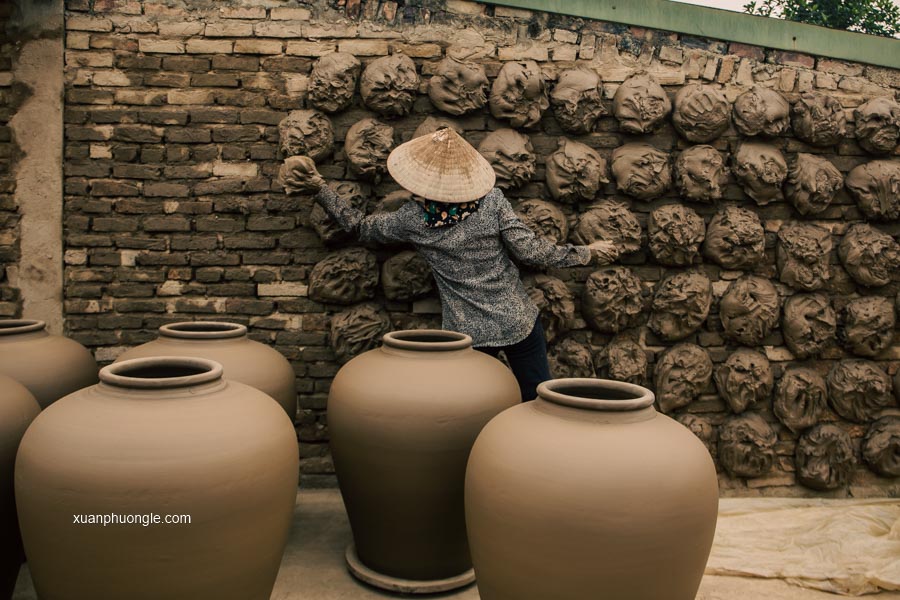
To convey the energy of the craft, try slowing your shutter speed slightly, letting the motion of flying clay and turning wheels create dynamic, expressive frames.
At the same time, the intimate details of the artisans’ work are equally compelling. Focus on hands shaping clay, faces lined with concentration, and aprons dusted in earth tone – these textures and expressions reveal the human heart behind every piece.
A medium zoom lens (24–70mm) is perfect for weaving between perspectives: capture the wide context of the village and workshop, then zoom in to highlight nuanced moments of craft. Lighting is important – early morning or late afternoon sun bathes clay in warm, golden tones, adding depth and a tactile quality that turns ordinary shots into storytelling images.
Photographing these villages is more than documenting craft; it’s about finding poetry in motion, texture, and tradition, and framing the quiet rhythm of a craft that has shaped Vietnamese life for centuries.
Vietnam’s pottery villages are places where time seems suspended – where earth meets fire, and craft becomes culture. For photographers, they offer not only rich visuals but also the satisfaction of capturing creation in its purest form.
The conical hat handicraft – symbol of Vietnamese grace
Few items are as instantly recognizable as the nón lá, Vietnam’s iconic conical hat. Seen across bustling streets, rural fields, and temple courtyards, the nón lá is more than a practical accessory. It is a symbol of Vietnamese elegance, resilience, and cultural identity.
Behind each delicate hat lies a story of craftsmanship and patience. Villages such as Chuong in Hanoi or Ba Don in Quang Binh are celebrated for producing these handmade treasures. Women artisans carefully select palm leaves, trim and shape them, then stitch them with meticulous precision. The result is not only functional but also a visual expression of grace and tradition – making it an ideal subject for storytelling photography.
Photographing nón lá artisans is about capturing both the grace of the craft and the rhythm of daily life. You can start with portraits, focusing on the serene concentration of women weaving, their hands moving delicately across the palm leaves. These close-ups reveal the intricate textures and precision that make each hat a work of art. Then, moving beyond stillness with action shots, photographers can document the process from leaf selection to final stitching. The repetition and motion of hands at work convey not just technique but the quiet discipline and artistry behind every piece.Travel photographers could consider creating a photo story, combining wide shots of the workshop environment with intimate details, narrating the journey of a conical hat from raw material to finished craft.
For lighting, soft, diffused morning light works best. It highlights textures and subtle details without harsh shadows, allowing the natural beauty of the leaves and the artisans’ hands to shine through.
Through these approaches, your images can tell a story of tradition, patience, and cultural elegance, transforming a simple village craft into a compelling visual narrative.
Photographing nón lá artisans offers a rare chance to combine human emotion, cultural heritage, and artistic composition – all in one frame. Each hat is more than an object; it’s a story waiting to be told.
Mat weaving – simple beauty in symmetry
Across Vietnam, from the northern provinces to Central Vietnam and the Mekong Delta, mat weaving remains a vibrant and enduring craft. Though simple in materials, the process is rich in pattern, color, and rhythm, reflecting the quiet beauty of daily Vietnamese life.
In these villages, colorful threads are stretched across wooden looms, creating bold geometric patterns that repeat in hypnotic sequences. The slow, meditative rhythm of weaving provides a serene atmosphere – perfect for detail shots, close-ups of hands at work, and environmental portraits. Scenes of dying and drying threads add another layer of visual interest, with their vivid colors and textural depth catching the eye at first glance.
In Vietnam’s mat weaving villages, patterns and symmetry are everywhere – waiting to be framed. For striking compositions, try a top-down perspective to reveal the geometric rhythm of threads stretched across wooden looms. These overhead angles turn the weaving process into an abstract, visually captivating scene.
Don’t forget to focus on texture. Close-ups of artisans’ hands, colorful threads, and the fine details of the loom capture the tactile artistry behind each mat, bringing the craft to life in your images.
To experience the best of this traditional craft, photographers can visit villages in Thanh Hoa, Phu Yen, and Dong Thap, where weaving is still practiced by hand. These locations are perfect for photographers seeking authentic cultural moments and rich, story-driven compositions.Mat weaving offers more than just a visual feast. Its patterns, colors, and human touch create imagery that is both simple and striking – a quiet celebration of Vietnam’s artisanal heritage.
Tips for perfect shots at Vietnam’s handicraft villages
Photographing artisans in Vietnam’s handicraft villages is as much about human connection as it is about technique. The magic happens when respect, patience, and observation meet your lens.
Build rapport first
Approach your subjects with warmth and curiosity. A smile, a friendly greeting, or a short conversation can go a long way. Many artisans are happy to be photographed once they feel seen and respected.
Patience is everything
The key to capturing compelling human moments lies in waiting for decisive moments. Observe first. Watch the rhythm of hands shaping clay, the careful threads of a loom, or the concentration of a weaver mid-stitch. The perfect shot often comes when motion and expression align naturally.
Lens choices for every purpose
Your choice of lens shapes not just the image but the story it tells:
16mm: Ideal for tight spaces or creative, immersive compositions.
35mm or 50mm: Perfect for environmental portraits, balancing context and intimacy.
85mm or 70–200mm: Excellent for close-ups and emotional candids without intruding.
24mm wide lens: Great for storytelling frames that capture both artisan and workspace in a single narrative shot.
Lighting matters
Most handicraft workshops rely on natural light, often streaming through windows or open courtyards. Position yourself to make the most of this soft illumination for gentle contrast and texture. Avoid flash unless absolutely necessary because it can disturb both the artisan’s rhythm and the authenticity of the scene.
By combining respect, patience, and thoughtful technical choices, photographers can transform a simple visit to a handicraft village into a rich, visual story of culture, craft, and human connection.
Join a cultural photography tour with me
Exploring Vietnam’s handicraft villages independently can be challenging. Many are tucked away in remote rural areas, with limited transport options and few locals speaking English. Without guidance, it’s easy to miss the stories, techniques, and authentic moments that make these villages so photogenic.
My photography tours bridge that gap. We connect photographers with the right artisans, optimal timing, and immersive access to village life, ensuring your lens captures both craft and culture.
With my guidance, you can focus on telling compelling visual stories – from the delicate rhythm of weaving looms to the fiery glow of pottery kilns – while respecting local traditions and preserving the authenticity of the experience.
Discover Vietnam’s crafts as they were meant to be seen: alive, vibrant, and full of soul.
 XUAN PHUONG